Pearl
Gourmet vanilla is truly a gift to the culinary world, treasured by chefs and food connoisseurs worldwide for its remarkable quality and delectable flavor. The visually alluring vanilla pods are free of any defects, while the sweet and floral scent is further enhanced by a subtle essence of chocolate.
This refined and stabilized product serves as an outstanding option to elevate the taste and aroma of baked goods and desserts to new heights. Every time you use gourmet vanilla, you are indulging in a world-renowned flavor that uplifts your cuisine to a whole new level.
The exceptional quality of this culinary treasure inspires creativity and encourages chefs to push their limits, making every dish a truly magnificent masterpiece.

Pearl at a glance
Pearl from Vanilla Fair: Vanilla Pearls, Madagascar vanilla cured at our Maroantsetra production sites. Supply is on quotation, from 50 kg per order, with specification sheets and samples on request. We export worldwide; our main markets are France, Germany, the United States, Canada, Japan, South Korea and the United Arab Emirates.
Estimate the quantity for your recipe or production with the formulation simulator; grades, curing and extraction terms are explained in the vanilla lexicon.
Available in
- Size
- 100 g – 1 kg

Buyer's guide
What are vanilla pearls?
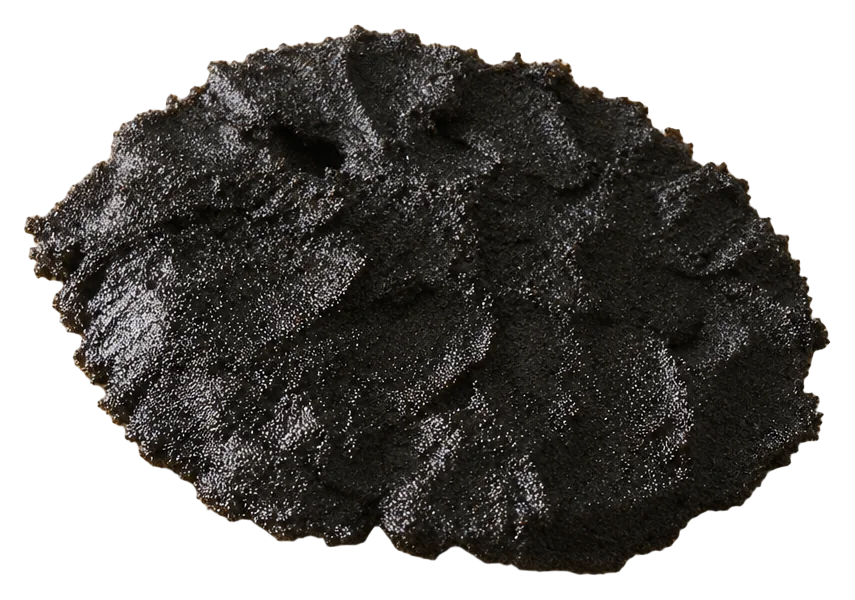
At Vanilla Fair, Vanilla Pearls are uniform, dark brown beads grated from split Madagascar vanilla beans, with a smooth texture and a sweet, lingering vanilla finish. Pastry chefs, ice cream makers and chocolatiers use them for a concentrated touch of vanilla and a visible garnish.
"Pearl" is a trade name, and the word covers different products on the professional market. One French house sells a pearl made of 45% vanilla concentrate and 55% natural seeds1; another describes its pearl as a ready-to-use paste of Bourbon pods with no added sugar2. Compare products on their specification sheet, not on their name.
Why split beans?
Splitting is a recognised part of vanilla grading. The international standard for vanilla pods, ISO 5565-1:1999, divides each quality category into non-split (A) and split (B) pods3. Pods left to ripen fully on the vine tend to split4, and the hot-water dip at the start of curing halts that natural splitting5. A split bean opens onto its seeds and the tissue around them, where the vanillin precursor is stored6.
Formats and storage
- Jars of 100 g, 250 g, 500 g and 1 kg, or custom bulk packaging for larger orders.
- Available all year round.
- 12 to 24 months at +12 °C to +19 °C, closed, away from air, light and other spices.
Applications
Fine pastry (mousses, creams, delicate desserts), artisanal ice cream, truffles and pralines, and plated desserts where the pearls act as a garnish. Doses depend on the product: the house selling a pearl of concentrate and seeds recommends 3 to 5 g per kg of preparation1. Confirm yours with a bench test and plan volumes with the formulation simulator.
How the beans are prepared
Our pearls start as Madagascar Vanilla planifolia cured by the Bourbon method: scalding, sweating, slow drying and conditioning. In published practice, scalded pods are wrapped in wool blankets in insulated boxes and sweat for about 24 to 48 hours at around 40 °C, coming out chocolate brown7,8; conditioning in closed trunks then lasts 2 to 6 months5. In our own curing, sweating lasts 48 to 72 hours above 40 °C, and the cured beans are sorted by appearance, size, moisture and colour.
What to ask for with a quote
- A specification sheet: composition, appearance, shelf life.
- Whether the product is vanilla alone or vanilla with a concentrate.
- Whether the seeds are fresh: some suppliers also sell seeds recovered after extraction, with a milder aroma, under the name "caviar"9.
- A sample, to judge colour, texture and behaviour in your recipe.
How to order
Pearls are a gourmet format in jars from 100 g, with a minimum order of 50 kg, all formats combined; volumes and packaging are quoted on request, with samples. For production volumes, see our vanilla pearls for industry. See also: vanilla caviar and vanilla bean paste.
Questions buyers ask
What is the difference between vanilla pearls and vanilla caviar?
Our pearls are uniform beads grated from split Madagascar beans; our caviar is the mass of seeds scraped from the heart of whole pods. Pearls give a bead-shaped garnish, caviar the pure seeds.
Are split vanilla beans a lower grade?
Not as such: ISO 5565-1:1999 keeps split pods (B) inside each quality category, next to non-split pods (A).
How should vanilla pearls be stored?
At +12 °C to +19 °C in the closed original packaging, away from air, light and other spices, for 12 to 24 months.
Sources
Industry and regulatory facts, each with its source. Vanilla Fair figures come from our product sheets.
- Norohy (Valrhona), VAKANA, perle de vanille
- Eurovanille (Vanifolia pro shop), Perle de vanille
- Bureau of Indian Standards, IS 15460 (Part 1):2004, identical to ISO 5565-1:1999, Vanilla: Specification
- FAO INPhO, Vanilla: Post-harvest Operations
- Eurovanille, Your Vanilla, Our Expertise
- Odoux et al., Annals of Botany (2003), Localization of beta-D-glucosidase activity and glucovanillin in vanilla bean
- Norohy (Valrhona), Étuvage de la vanille Madagascar
- Perfumer & Flavorist, vol. 40 (2015), Dunphy and Bala, vanilla curing review
- Natural Vanilla, Vanilla seeds